The Hivemind / Forager
One desktop client for every model you use
Forager is a multi-model desktop client for AI work. Chat, code, put models in a room together and let agents work unattended, with local models as a first-class option and your organization's rules enforced on the device.
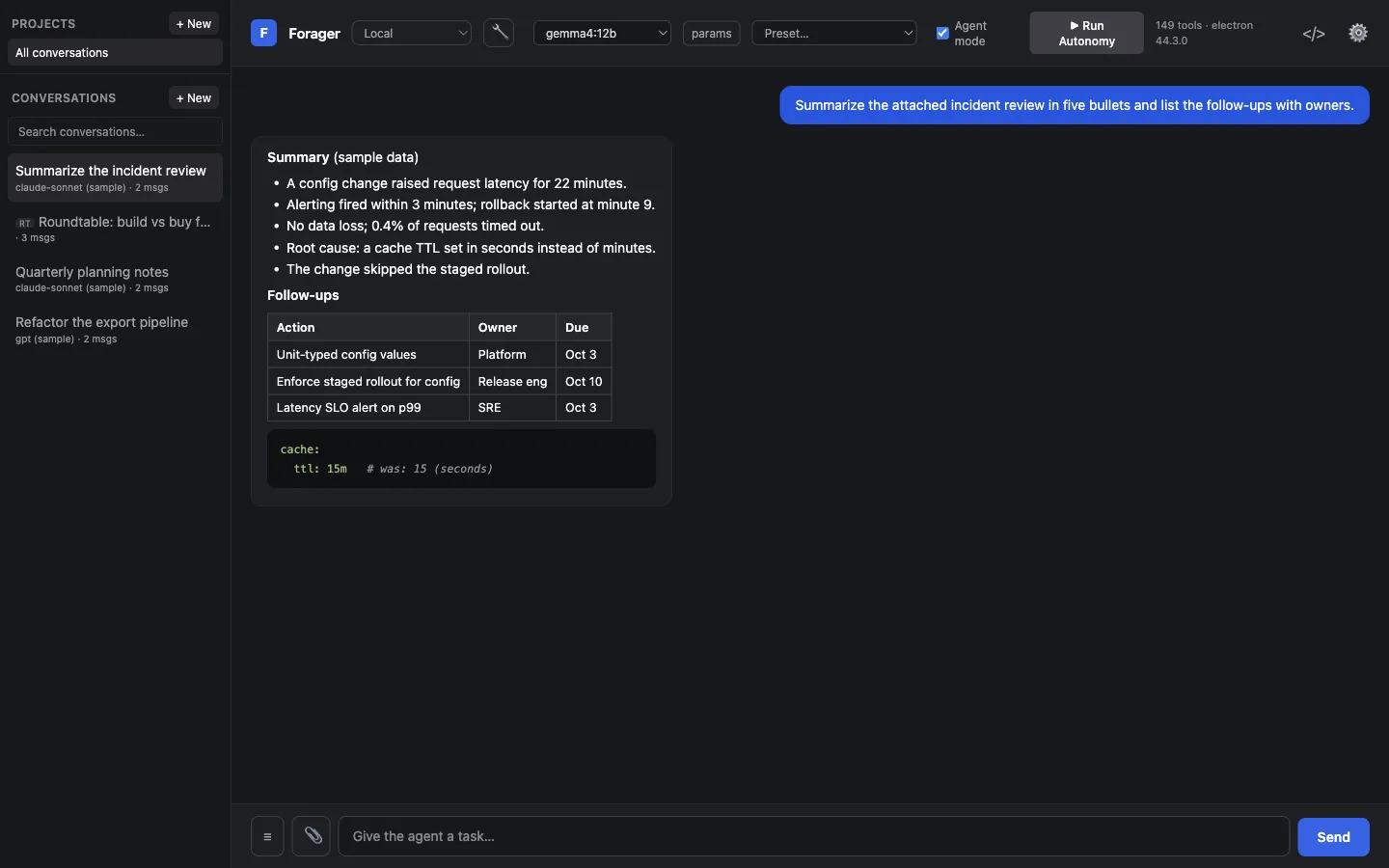
A look at the app
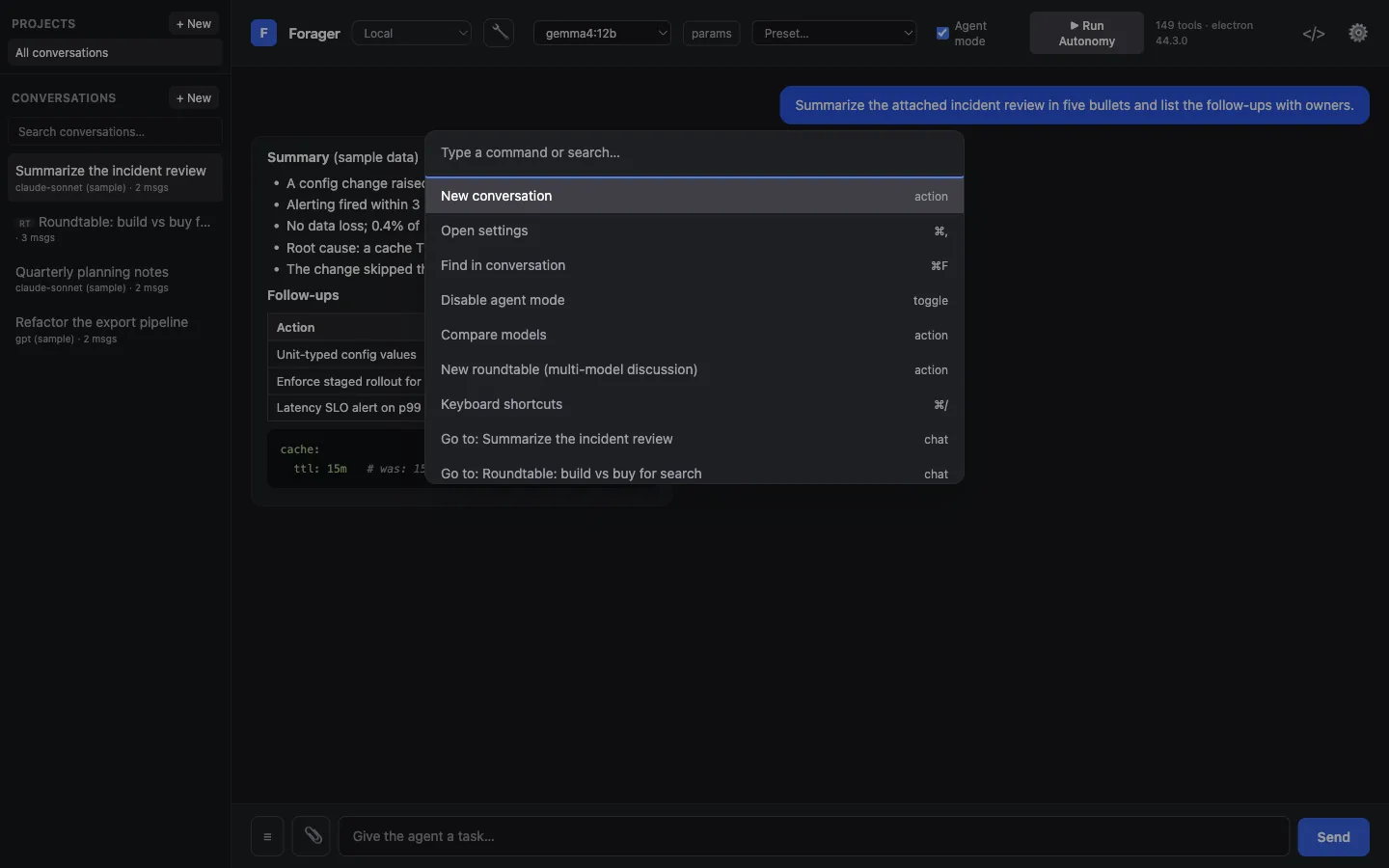
Captured from the running development build. Conversations shown are sample data.
What it does today
The feature set in the current development build.
Many providers, one client
Anthropic, OpenAI and Google Vertex, plus local models through Ollama and llama.cpp for work that should not leave the machine. An OpenAI-compatible gateway reaches AWS Bedrock and other brokered models.
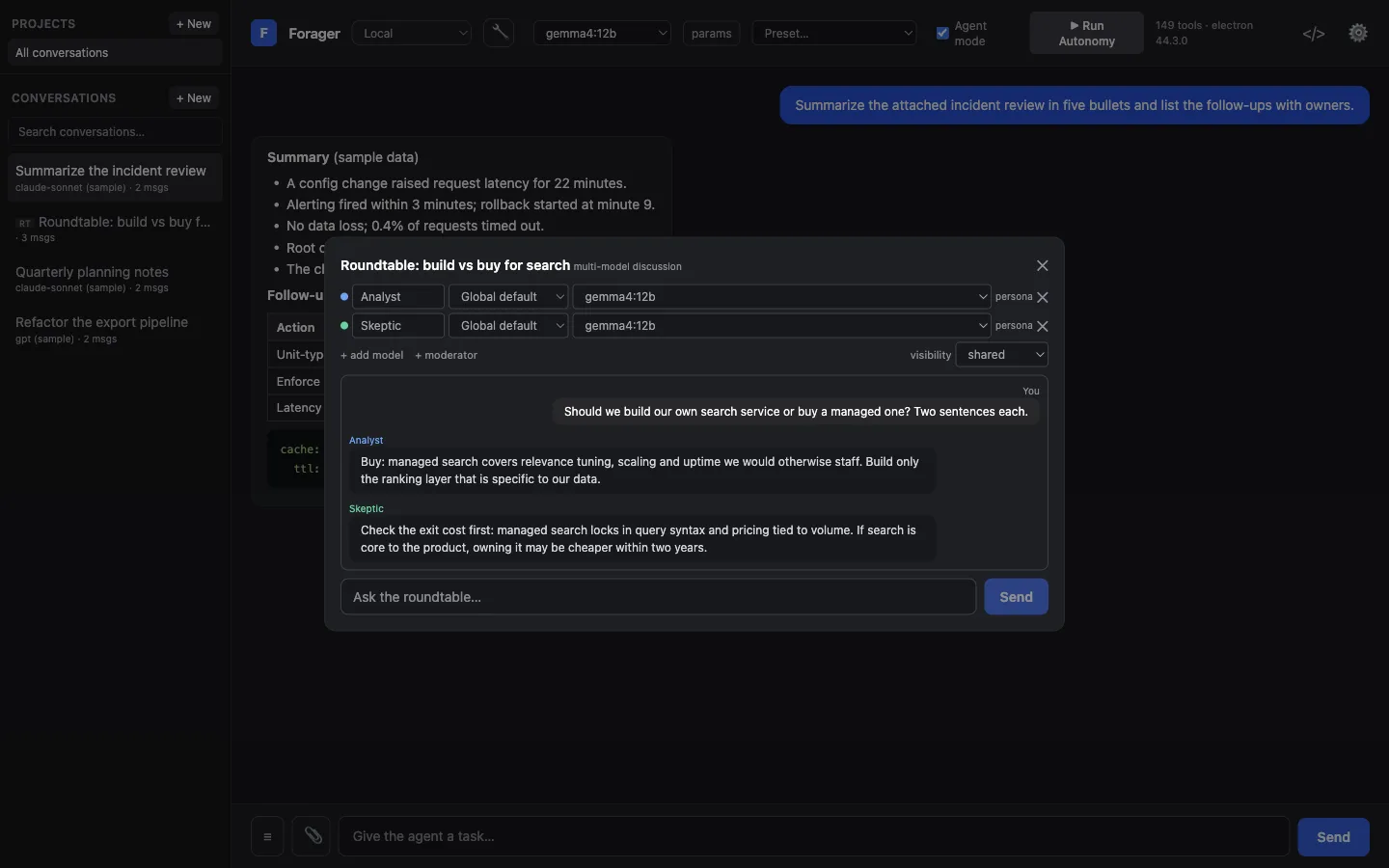
Roundtable and compare
Convene several models, each with its own model and persona, plus an optional moderator. Share context so they build on each other, or isolate them and compare answers side by side.
A coding agent you review
Describe a change and the agent plans it with workspace-scoped tools, then stages the edits as a diff for your approval. Nothing is written or run without consent.
Isolated language servers
Editor diagnostics for TypeScript, Python, Rust, Go and ESLint. The Go, Rust and ESLint servers run in network-off containers pinned by digest, so the host needs no extra toolchains.
Dev in Docker
Optionally run the coding agent's commands inside a container with the workspace mounted, isolating the filesystem and network from your machine.
Tools, skills and knowledge
Connect MCP servers, load skills, index your own documents for retrieval, and keep snippets and presets for repeated work.
AI-powered artifacts
Generated documents and small apps can call a model through a mediated bridge that is consented per artifact and capped by budget.
Unattended runs
An autonomy mode with governance gates, checkpoints and recovery, so agents can keep working through a queue when you step away.
Quick ask and channels
Summon a quick-ask window with a global shortcut, publish self-contained deliverables locally, and reach an agent from a Telegram bot.
What's different
Most AI clients are a window onto one vendor. Forager is built around a few choices that change how it behaves.
Switching providers is a setting, not a migration. Local models are first-class, and a conversation that names an unavailable model falls back to one you have, with a notice.
A roundtable or a side-by-side comparison makes a second opinion routine. Isolated mode keeps the answers independent so you can see where models actually differ.
Agent edits arrive as a staged diff, tools are scoped to the workspace, and container isolation is available for both language servers and commands.
Forager works fully on its own. Connecting it to a Hivemind tenant adds identity, policy and sync, and if the tenant is unreachable it falls back to standalone rather than locking you out.
Built for organizations
Controls an administrator sets centrally and the client enforces locally.
- SSO (OIDC) and SCIM provisioning
- Google sign-in
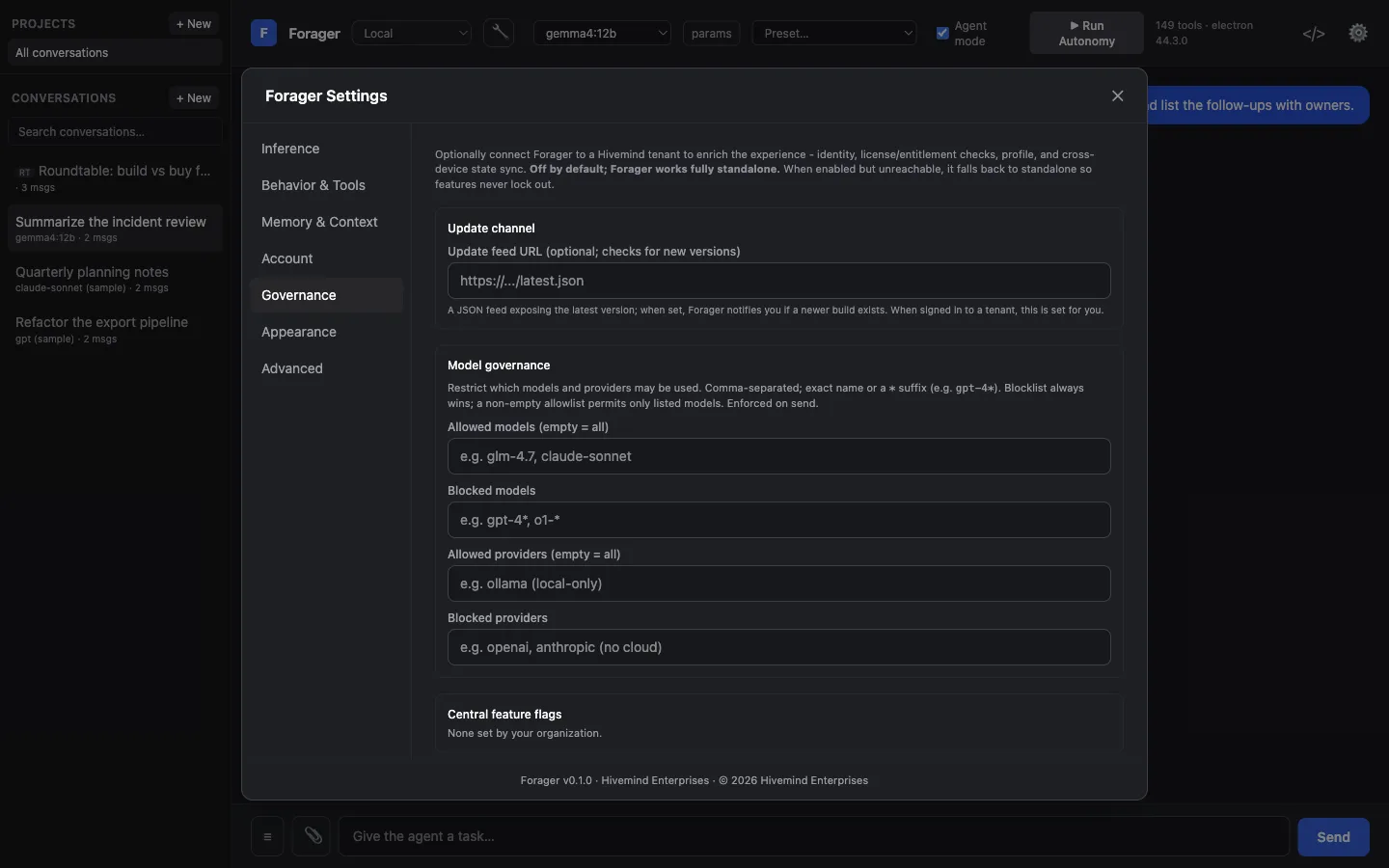
- Model and provider allow and block lists
- Central feature flags
- Per-conversation and per-artifact budgets
- Audit trail
- Over-the-air updates verified by SHA-512 before install
- Update channel control
- Self-service account deletion with a grace period
- Automated accessibility checks in CI
Interested in Forager?
Forager is in development and not yet available. Tell us what you would use it for and we will follow up as early access opens.
support@thehivemind.io